Stock Update
NSE: SERVOTECH Know More
Stock Update
NSE: SERVOTECH Know More

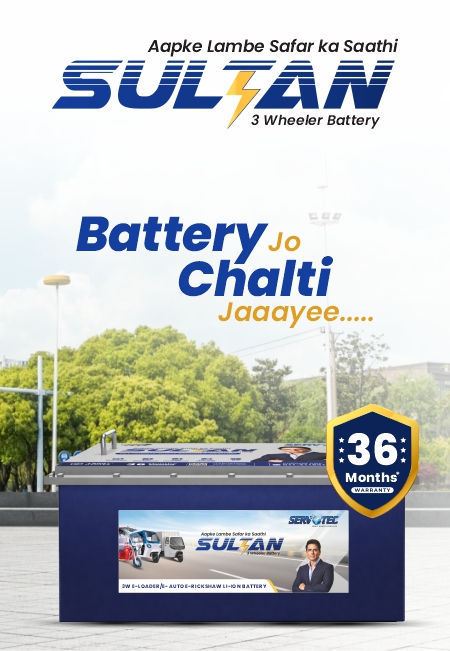
Servotech 3 WheelerE Rickshaw Battery
Servotech’s 3 Wheeler Lithium Ion E Rickshaw Battery is engineered with precision to deliver reliable power backup that keeps you moving without interruptions. Designed with high energy density, our Lithium ion battery offers a longer driving range while staying lightweight and compact for better vehicle efficiency. Built for durability and consistent performance, our 3 wheeler e rickshaw battery needs minimal maintenance, reducing downtime and operating costs. With dependable power and extended life, they help drivers stay on the road longer, delivering higher productivity, better earnings, and complete peace of mind.
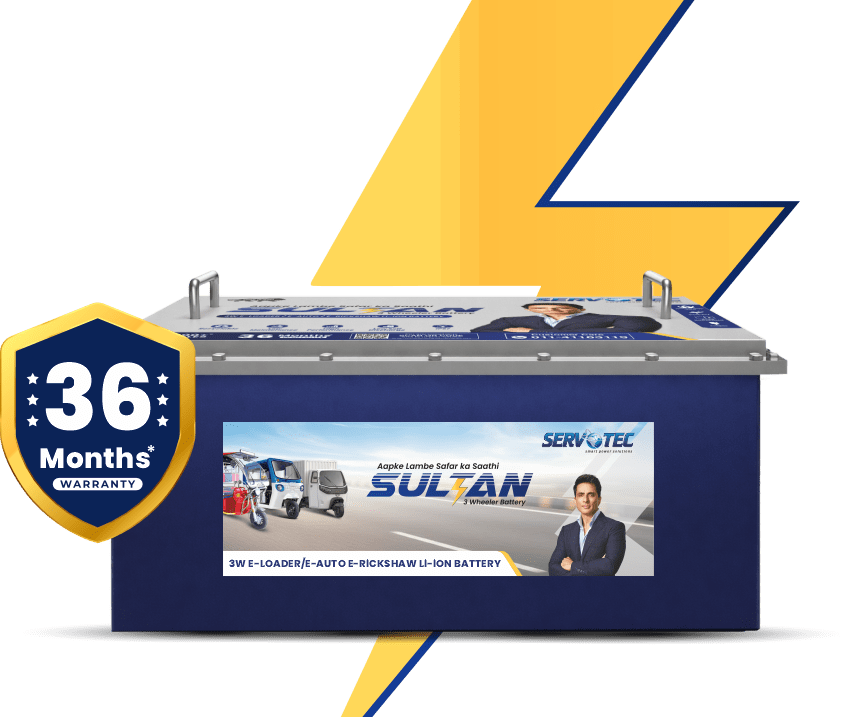
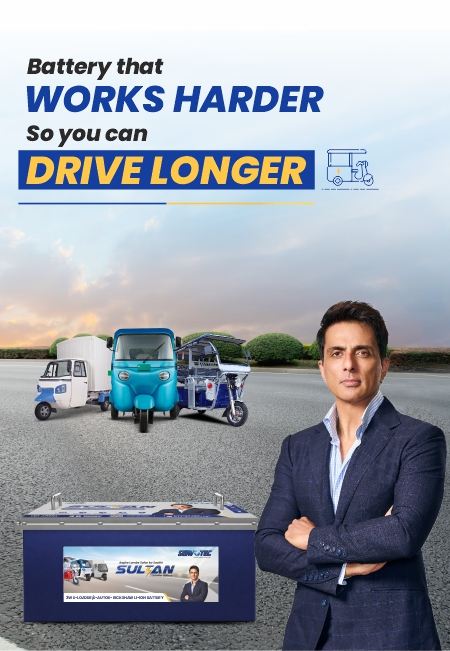
Why Choose SULTAN E Rickshaw Battery?
Eco-Friendly
Delivers clean, sustainable power with zero emissions, helping reduce environmental impact while supporting greener urban mobility every day

Lightweight & Compact
Compact and lightweight design improves vehicle balance and efficiency for better performance without any unnecessary load

High Energy Density
Stores more power in less space, delivering longer driving range and consistent performance throughout the day

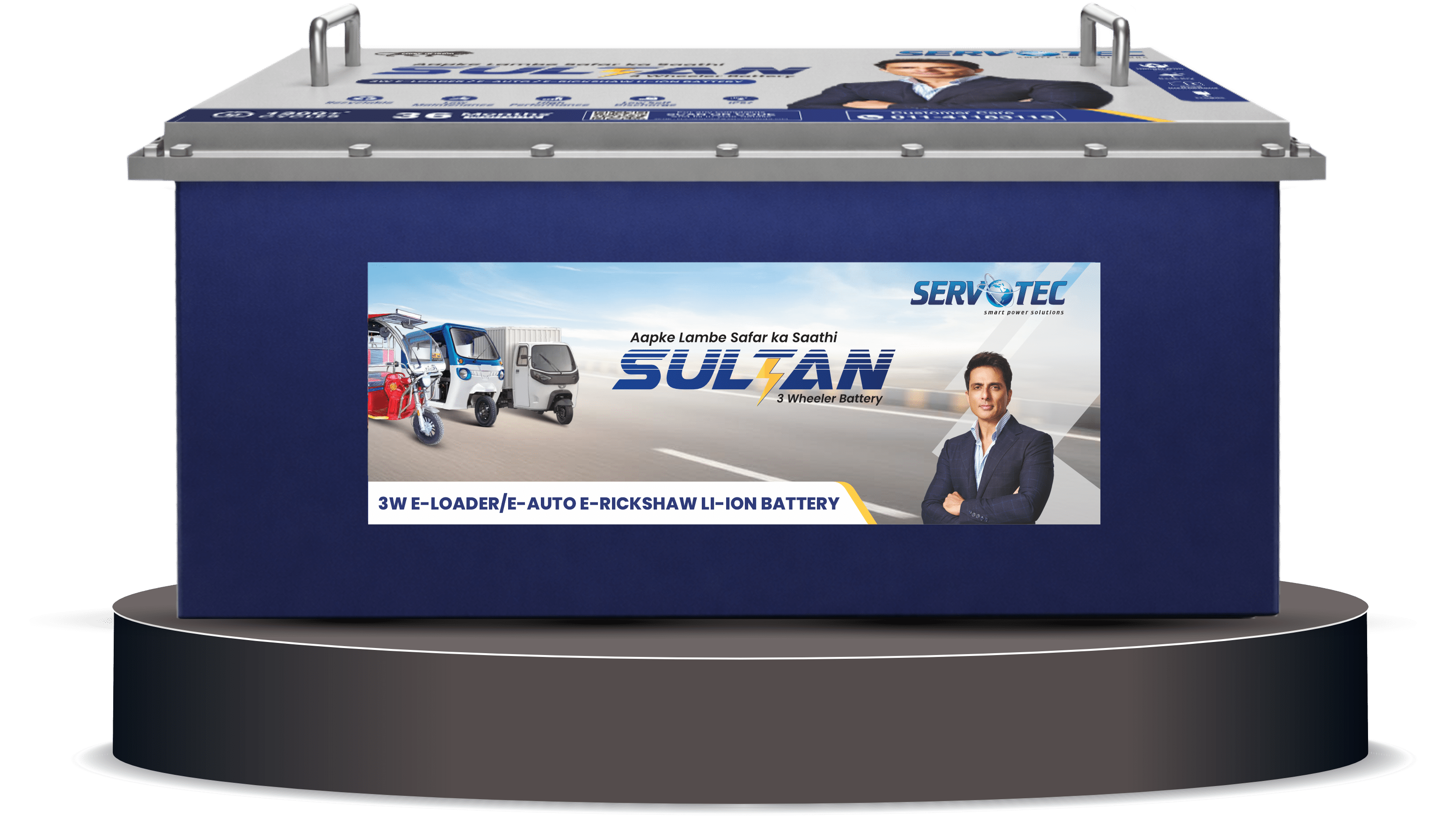
Low Maintenance
Built for durability with minimal maintenance, reducing downtime and upkeep costs for everyday operations

Low Self Discharge Rate
Our lithium ion battery retains charge efficiently even during idle periods, ensuring dependable power availability whenever the vehicle is in use
More Charge Cycles
Designed to last longer with higher charge cycles, this 3 Wheeler Lithium Battery offers extended battery life and better long-term value

Available Models
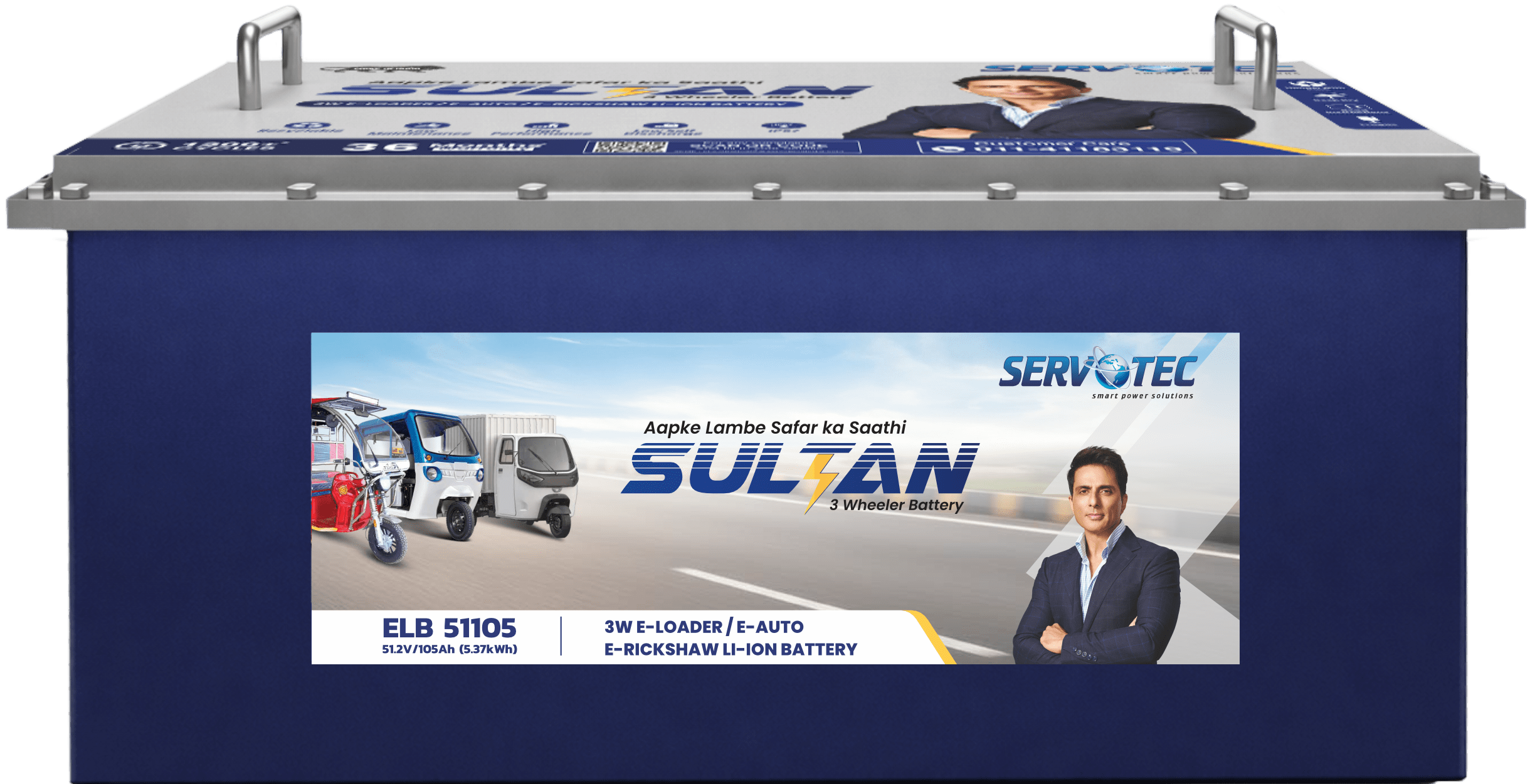
Servotech’s Sultan 51.2V 105Ah 3 Wheeler E Richskaw Battery is crafted with perfection for to deliver long battery life so you can charge faster and drive farther.
Key Specifications

Short-Circuit Protection
Ingress Protection

Efficiency > 90%
Input Voltage Range 150V - 270V
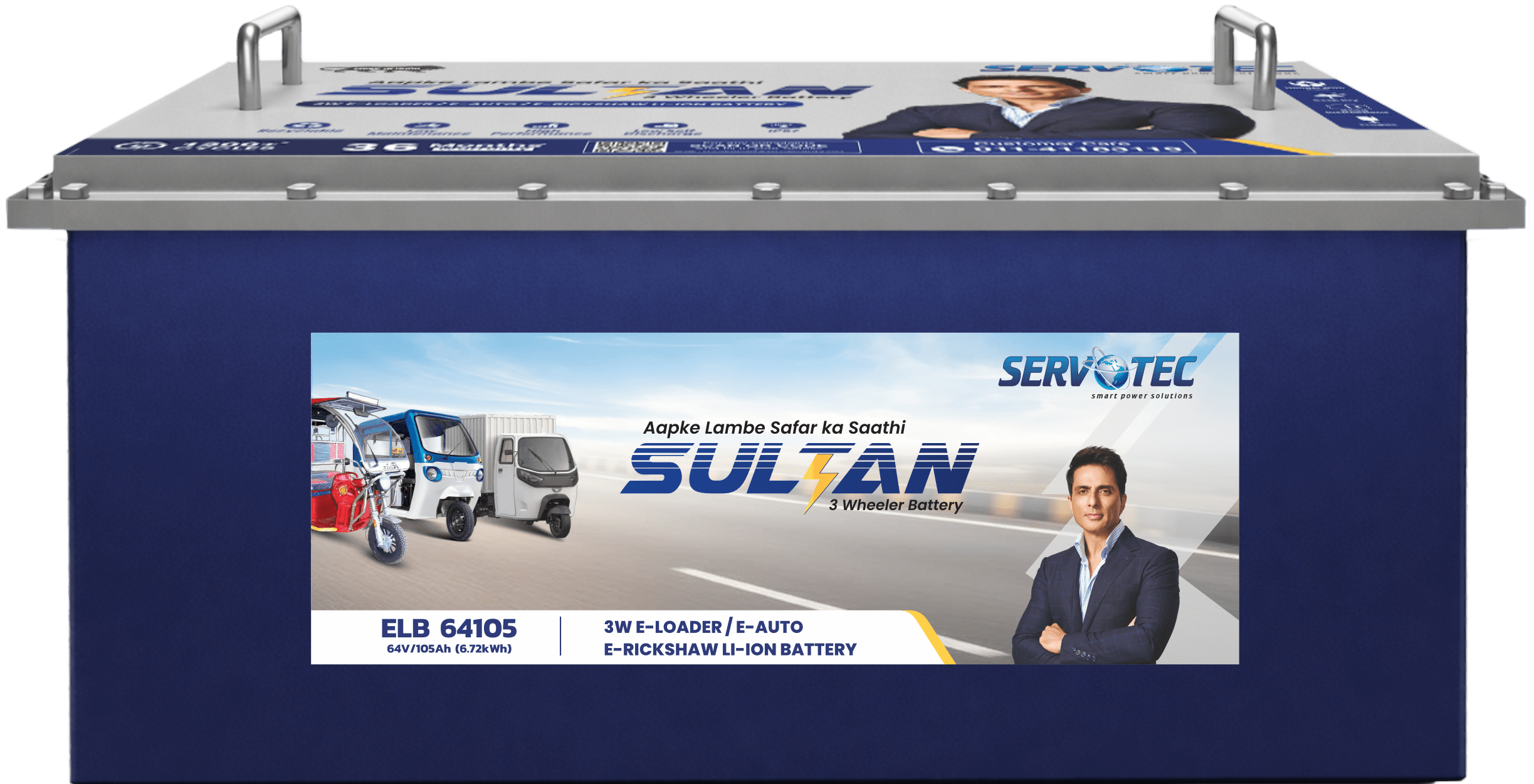
Designed for electric 3-wheelers, the Servotech Sultan 64V 105Ah e rickshaw battery ensures efficient charging, extended drive time, and reliable long-term performance
Key Specifications
Short-Circuit Protection
Ingress Protection
Efficiency > 90%
Input Voltage Range 150V - 270V
Servotech’s Sultan 51.2V 105Ah 3 Wheeler E Richskaw Battery is crafted with perfection for to deliver long battery life so you can charge faster and drive farther.
Key Specifications
Short-Circuit Protection
Ingress Protection
Efficiency > 90%
Input Voltage Range 150V - 270V
Designed for electric 3-wheelers, the Servotech Sultan 64V 105Ah e rickshaw battery ensures efficient charging, extended drive time, and reliable long-term performance
Key Specifications
Short-Circuit Protection
Ingress Protection
Efficiency > 90%
Input Voltage Range 150V - 270V
Servotech’s Sultan 51.2V 105Ah 3 Wheeler E Richskaw Battery is crafted with perfection for to deliver long battery life so you can charge faster and drive farther.
Key Specifications
Short-Circuit Protection
Ingress Protection
Efficiency > 90%
Input Voltage Range 150V - 270V
Designed for electric 3-wheelers, the Servotech Sultan 64V 105Ah e rickshaw battery ensures efficient charging, extended drive time, and reliable long-term performance
Key Specifications
Short-Circuit Protection
Ingress Protection
Efficiency > 90%
Input Voltage Range 150V - 270V
Applications
E-Rickshaw
Servotech E rickshaw batttery is optimized for urban mobility our e rickshaw lithium battery offers extended driving range, dependable power, and low maintenance for uninterrupted passenger operations throughout the day.
E-Auto
Our 3 wheeler lithium ion battery provides smooth and reliable energy output, ensuring efficient daily commutes with reduced downtime and enhanced vehicle performance
E-Loader
Designed for heavy-duty performance, delivering consistent power and longer runtime to handle demanding loads and frequent stop-start operations
Interested in
Our 3 Wheeler
E Rickshaw Battery?
Get in Touch to Join Us and Get Our Products
Fill the Enquiry Form
Servotech’s Network
At Servotech we manage a smooth movement of goods from our Factories to the Distributors & Retailers across the country

Distributor Network
500+Distributors across Metros & Mini-metros

Retailers
5000+covering more than 350 Towns across India

Super Stockist
East India and South India

After Sales Service
Fastest FRT (2 hours) Across India

R&D and NPD
In House Design, R&D, NPD Team

System & Process Driven Approach

Cumulative 50 Years of Experience in Lithium Batteries
Become Our
Dealer & Distributor Today!
Blogs
Sultan E Rickshaw Battery
Zyada Chalao Zyada Kamao
Is Sultan The Best E Rickshaw Battery?
The Sultan E rickshaw battery is one of the best three wheeler lithium ion battery in the market, offering over 1200 cycles, lightweight, and compact size, and one of the most affordable e rickshaw battery price so you can drive longer and earn more.
FAQs
+Who are the top lithium-ion battery manufacturers in India?
Leading manufacturers include Servotech, Neuron Energy, Exide, Amara Raja, and other emerging players in the EV and energy storage space.
+How much do lithium-ion batteries cost in India?
The cost of lithium-ion batteries in India varies based on voltage, capacity, chemistry, application, and service support. Prices differ significantly between two-wheeler, three-wheeler, and commercial EV batteries, and are also influenced by BMS features and warranty coverage.
+What is the Servotech SULTAN battery?
SULTAN is Servotech's high-performance lithium-ion battery specifically designed for the 3W E-LOADER/E-AUTO/E-RICKSHAW segment. Its enduring performance making it an ideal companion for long journeys (Aapke Lambe Safar Ka Saathi)
+Why should I switch from Lead-Acid (VRLA) to the SULTAN Lithium-ion battery?
Switching to SULTAN maximizes your earnings and minimizes expenses. It is up to 60% lighter, which increases your vehicle's payload capacity. It also offers up to 70% savings in space and longer life, significantly lowering your Total Cost of Ownership.
+Which electric 3-wheelers are compatible with the SULTAN battery?
SULTAN is engineered for universal compatibility across the 3W segment, including E-Rickshaws, E-Autos, and E-Loader/Cargo vehicles.
+What are the key benefits of the LFP Cell Chemistry used in SULTAN?
SULTAN uses LFP (Lithium Iron Phosphate) cell chemistry. This chemistry is known for its superior safety, longer calendar life, and excellent thermal stability, making it ideal for the demanding use of electric 3-wheelers.
+How much does an e-rickshaw lithium battery cost?
The cost of an e-rickshaw lithium-ion battery depends on voltage rating, amp-hour capacity, cell chemistry, and lifecycle performance. Commercial-grade batteries with smart BMS, higher cycle life, and safety certifications generally cost more than basic configurations but offer better long-term value.
+How long does it take to charge a lithium ion battery for e-rickshaw?
Charging time for an e-rickshaw lithium-ion battery depends on battery capacity and charger rating. Typically, lithium-ion batteries charge faster than lead-acid batteries when charged using the recommended current, while maintaining safety and battery health.
+Why are lithium-ion solar batteries more expensive than lead-acid batteries?
Lithium-ion solar batteries cost more because they offer higher energy density, longer lifecycle, deeper discharge capability, and lower maintenance. They also include advanced BMS for safety and monitoring, which increases upfront cost but reduces long-term operating expenses.
+Can I replace my lead-acid rickshaw battery with a lithium-ion one?
Yes, lead-acid rickshaw batteries can be replaced with lithium-ion batteries, provided the vehicle system is compatible.Proper voltage matching, charger compatibility, and correct installation are essential to ensure safe and efficient operation.
+What is the charging time difference between lead-acid and lithium batteries?
Lead-acid batteries usually take 6–10 hours to charge, while lithium-ion batteries charge much faster, typically in 2–4 hours. Lithium-ion batteries generally charge faster than lead-acid batteries under similar conditions. They also allow partial charging without performance loss, whereas lead-acid batteries require longer charging cycles and regular full charging.
+Which lithium-ion battery is best for electric vehicles?
The best lithium-ion battery for an electric vehicle is undoubtedly SULTAN Li-ion Batteries that come with LFP chemistry, smart BMS, appropriate capacity, and reliable service support which is generally preferred for commercial EV applications.
Our Clients