
• About Us
    • Awards & Felicitations
    • Our Company
    • Our Leadership
    • Our Projects
    • Testaments
  • Products
    • EV Charger
      • Spark Series (AC Charger)
      • Squad Series (DC Charger)
    • LEDs
      • Domestic LED
      • Commercial LED
    • Power & Backup
      • Battery
      • Servo Stabilizer
      • UPS
    • Solar Solutions
      • Solar Inverter
      • ServPort
      • Solar Management Unit
      • Solar Batteries
      • Solar Panels
    • Electric 3W Solutions
      • Lithium Battery
      • Electric 3W Charger
    • Others
      • Oxygen Concentrator
      • UVC
  • Solutions
    • Solar EPC
    • Solar Calculator
    • EV Calculator
  • Media
    • Blogs
    • Events
    • Media Coverages
    • Media Kit
    • Press Releases
  • Investors
  • Contact

Type To Search

  • About Us
    • Awards & Felicitations
    • Our Company
    • Our Leadership
    • Our Projects
    • Testaments
  • Products
    • EV Charger
      • Spark Series (AC Charger)
      • Squad Series (DC Charger)
    • LEDs
      • Domestic LED
      • Commercial LED
    • Power & Backup
      • Battery
      • Servo Stabilizer
      • UPS
    • Solar Solutions
      • Solar Inverter
      • ServPort
      • Solar Management Unit
      • Solar Batteries
      • Solar Panels
    • Electric 3W Solutions
      • Lithium Battery
      • Electric 3W Charger
    • Others
      • Oxygen Concentrator
      • UVC
  • Solutions
    • Solar EPC
    • Solar Calculator
    • EV Calculator
  • Media
    • Blogs
    • Events
    • Media Coverages
    • Media Kit
    • Press Releases
  • Investors
  • Contact

Type To Search

  • About Us
    • Awards & Felicitations
    • Our Company
    • Our Leadership
    • Our Projects
    • Testaments
  • Products
    • EV Charger
      • Spark Series (AC Charger)
      • Squad Series (DC Charger)
    • LEDs
      • Domestic LED
      • Commercial LED
    • Power & Backup
      • Battery
      • Servo Stabilizer
      • UPS
    • Solar Solutions
      • Solar Inverter
      • ServPort
      • Solar Management Unit
      • Solar Batteries
      • Solar Panels
    • Electric 3W Solutions
      • Lithium Battery
      • Electric 3W Charger
    • Others
      • Oxygen Concentrator
      • UVC
  • Solutions
    • Solar EPC
    • Solar Calculator
    • EV Calculator
  • Media
    • Blogs
    • Events
    • Media Coverages
    • Media Kit
    • Press Releases
  • Investors
  • Contact
  • About Us
    • Awards & Felicitations
    • Our Company
    • Our Leadership
    • Our Projects
    • Testaments
  • Products
    • EV Charger
      • Spark Series (AC Charger)
      • Squad Series (DC Charger)
    • LEDs
      • Domestic LED
      • Commercial LED
    • Power & Backup
      • Battery
      • Servo Stabilizer
      • UPS
    • Solar Solutions
      • Solar Inverter
      • ServPort
      • Solar Management Unit
      • Solar Batteries
      • Solar Panels
    • Electric 3W Solutions
      • Lithium Battery
      • Electric 3W Charger
    • Others
      • Oxygen Concentrator
      • UVC
  • Solutions
    • Solar EPC
    • Solar Calculator
    • EV Calculator
  • Media
    • Blogs
    • Events
    • Media Coverages
    • Media Kit
    • Press Releases
  • Investors
  • Contact
Read More
Solar
May 22, 2026by Prabhutva Tiwari0 Comments
26 Likes

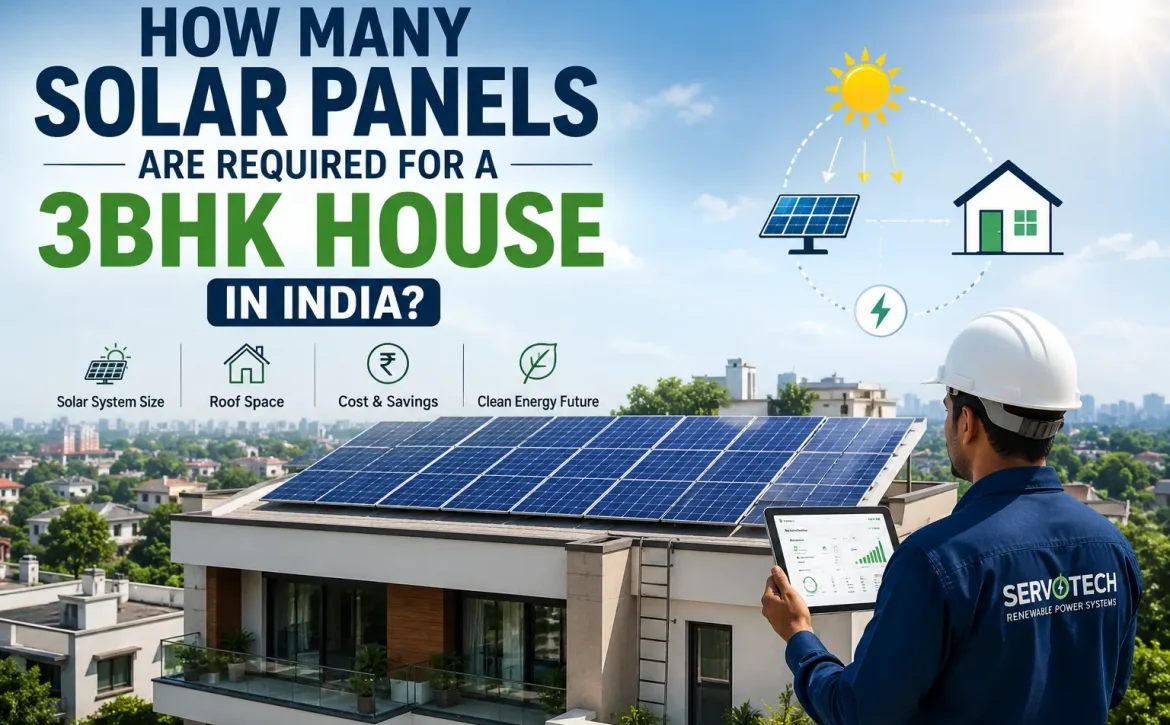
How Many Solar Panels Are Required for a 3BHK House in India?

With rising electricity prices and growing awareness of clean energy, more homeowners in India are exploring rooftop solar solutions to reduce their electricity bills and become less dependent on the grid. One of the most common questions homeowners ask before installing solar is: “How many solar panels are required for a 3BHK house in India?”.
The answer depends on several factors, including your monthly electricity consumption, appliance usage, roof space availability, and the efficiency of the solar panels being installed.
In this guide, we’ll explain how solar panel requirements are calculated, what size solar system is suitable for a typical 3BHK house, and how you can estimate your potential savings.

Understanding Electricity Consumption in a 3BHK House

Before calculating the number of solar panels required, it’s important to understand how much electricity a typical 3BHK home consumes.

Most Indian 3BHK households use electricity for:

  • LED lights
  • Ceiling fans
  • Air conditioners
  • Refrigerators
  • Washing machines
  • Water pumps
  • Televisions
  • Kitchen appliances
  • Laptops and computers
  • Wi-Fi routers and smart devices

Depending on family size and appliance usage, a typical 3BHK house consumes approximately:

Monthly ConsumptionRecommended Solar System
300–400 Units3kW System
400–600 Units4kW System
600–800 Units5kW System
800+ Units6kW+ System

For most Indian families living in a 3BHK house, a 3kW to 5kW rooftop solar system is usually sufficient.

How Solar Panel Calculations Work

Solar system sizing is generally based on daily energy consumption.

Step 1: Find Your Monthly Electricity Usage

Check your electricity bill and note the total units (kWh) consumed per month.

For example:

Monthly Consumption = 600 Units

Daily Consumption:

600 ÷ 30 = 20 kWh per day

Step 2: Calculate Required Solar Capacity

In most parts of India, a solar system generates around 4–5 units of electricity per kW per day.

For 20 units daily consumption:

20 ÷ 4.5 = 4.44 kW

This means a 5kW solar system would be ideal.

Step 3: Calculate Number of Solar Panels

Modern residential solar panels typically range between 540W and 600W capacity.

For example:

5kW System ÷ 550W Panel

= 5000 ÷ 550

≈ 9 Panels

Therefore, a typical 3BHK house requiring a 5kW system would need approximately 9–10 high-efficiency solar panels.

How Many Solar Panels Are Needed for Different 3BHK Homes?

The exact requirement varies based on consumption patterns.

For Low Electricity Consumption (300–400 Units)

Recommended System Size:

3kW

Panels Required:

5–6 panels (550W each)

Suitable for:

  • Small families
  • Limited AC usage
  • Energy-efficient homes

For Average Electricity Consumption (500–600 Units)

Recommended System Size:

4–5kW

Panels Required:

8–10 panels

Suitable for:

  • Typical urban households
  • Multiple appliances
  • Moderate AC usage

For High Electricity Consumption (700–900 Units)

Recommended System Size:

6kW+

Panels Required:

11–13 panels

Suitable for:

  • Large families
  • Multiple air conditioners
  • High appliance usage

Roof Space Required for a 3BHK Solar System

Roof area is another important factor. Approximate rooftop space requirements:

Solar System SizeRoof Space Required
3kW250–300 sq. ft.
4kW350–400 sq. ft.
5kW450–500 sq. ft.
6kW550–650 sq. ft.

A standard 3BHK independent house usually has sufficient rooftop area for a residential solar installation.

Factors That Affect Solar Panel Requirements

Not every home requires the same number of panels. Several factors influence the calculation.

1. Solar Panel Efficiency

Higher-efficiency solar panels generate more power using less roof space.

Premium solar panels can reduce the total number of panels required compared to conventional modules.

2. Geographic Location

Solar generation varies across India depending on:

  • Sunlight availability
  • Weather conditions
  • Seasonal variations
  • Shading

States with higher solar irradiance can generate more electricity from the same system size.

3. Appliance Usage

Homes with:

  • Multiple AC units
  • Electric geysers
  • Water pumps
  • Large refrigerators

typically require larger systems.

4. Future Electricity Needs

Many homeowners now consider future requirements such as:

  • Electric vehicle charging
  • Additional air conditioners
  • Home office setups
  • Smart home devices

Installing a slightly larger system today may provide better long-term value.

On-Grid vs Off-Grid Solar for a 3BHK House

Choosing the right solar system type is equally important.

On-Grid Solar System

Connected to the electricity grid.

Benefits:

  • Lower installation cost
  • Net metering benefits
  • Reduced electricity bills
  • No battery requirement

Ideal for most urban households.

Off-Grid Solar System

Operates independently with battery storage.

Benefits:

  • Backup during outages
  • Energy independence

Suitable for remote areas with unreliable grid access.

Hybrid Solar System

Combines:

  • Solar panels
  • Grid connectivity
  • Battery backup

Provides both savings and backup support.

What Is the Cost of a Solar System for a 3BHK House?

The cost depends on system size, panel quality, inverter type, and installation requirements.

Approximate costs:

System SizeEstimated Cost Range
3kW₹1.8 – ₹2.5 Lakhs
4kW₹2.4 – ₹3.2 Lakhs
5kW₹3 – ₹4 Lakhs
6kW₹3.8 – ₹5 Lakhs

Government subsidies available under residential solar schemes can further reduce installation costs.

Why Homeowners Are Switching to Rooftop Solar

Residential solar adoption in India continues to grow because it offers:

  • Lower electricity bills
  • Attractive long-term returns
  • Reduced dependence on grid power
  • Environmentally friendly energy generation
  • Increased property value
  • Protection against rising electricity tariffs

With modern high-efficiency solar panels and net metering policies, homeowners can maximize energy savings for decades.

Choosing the Right Solar Partner

The performance of a solar system depends not only on the panels but also on system design, installation quality, inverter selection, and after-sales support.

Servotech Renewable Power System is an Indian renewable energy company offering solar solutions, EV chargers, and lithium-ion battery systems. The company provides rooftop solar solutions designed for residential, commercial, and industrial applications, helping consumers transition toward cleaner and more sustainable energy usage.

Conclusion

So, how many solar panels are required for a 3BHK house in India?

For most households, the answer ranges between 5 and 10 high-efficiency solar panels, depending on electricity consumption and system size.

A typical 3BHK house generally requires a 3kW to 5kW rooftop solar system, which can significantly reduce electricity bills while contributing to a cleaner energy future.

Before making a decision, evaluate your electricity usage, rooftop space, future energy needs, and available government incentives. A professional solar assessment can help determine the ideal system size for maximum savings and performance.

Frequently Asked Questions (FAQs)

How many solar panels are needed for a 3BHK house?

Most 3BHK homes require between 5 and 10 solar panels depending on monthly electricity consumption and panel wattage.

Is a 3kW solar system enough for a 3BHK house?

A 3kW system is sufficient for homes consuming around 300–400 electricity units per month with moderate appliance usage.

What size solar system is best for a 3BHK home?

For most Indian households, a 4kW to 5kW solar system provides an ideal balance between energy generation and cost savings.

How much roof space is required for a 5kW solar system?

A 5kW rooftop solar system generally requires approximately 450–500 square feet of shadow-free roof space.

Can I run air conditioners on rooftop solar?

Yes. Properly sized rooftop solar systems can efficiently support air conditioners along with other household appliances.

Does the government provide subsidy for residential solar systems?

Yes. Eligible homeowners can avail subsidies under government-backed rooftop solar schemes, subject to prevailing guidelines and eligibility criteria.
Read More
Solar
December 20, 2022by servotech team4 Comments
582 Likes

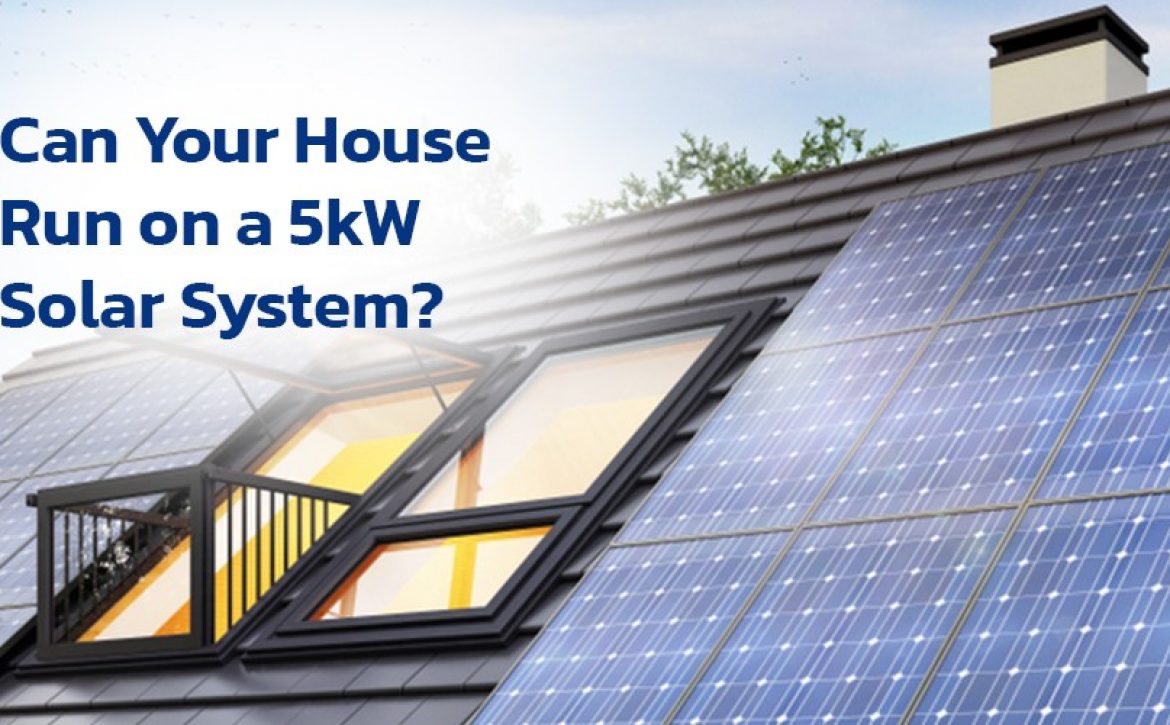
Can Your House Run on a 5kW Solar System?

Due to their mix of high energy yields and excellent value for money, 5 kilowatt (5 kW) solar systems have grown to be one of the most popular sizes in India. Installing a solar energy system in your house is a wise and long-term investment. In order to make it simpler for householders to take advantage of renewable energy, the Indian government is also working to turn the nation into a “green economy.” What price points, electricity outputs, and monetary returns might a homeowner anticipate from a 5kW solar PV system? This article examines.

Considering what wattage the panels possess and how they’re angled, a modern 5kW solar system will consist of roughly 15-20 panels and require between 25 and 35 m2 of roof area. The size of a solar panel on a 5kW system is typically roughly 1.7 meters by 1 meter, though this might vary depending on the brand and whether it is intended for commercial or domestic usage.

Understanding your Cost and Capacity Requirements

A solar array with a 5kW capacity may produce up to 5kW of electricity for your home at its maximum output. The solar irradiance is not always at its peak (over 1000 kW/m2) during the day, so a 5kW system doesn’t constantly achieve its full energy-production threshold.

The overall cost of a 5kW solar system in India with a subsidy can decrease dramatically thanks to solar subsidies and practical financing choices, such as leasing and loan solar, and getting into long-term PPAs, or power purchase agreements. A 5kW solar system will typically cost between Rs 70,000 and Rs 1.5 Lakhs per kW, bringing the total cost to between Rs 3 Lakh and Rs 6.5 Lakhs. 

This cost is calculated without accounting for any potential residential solar system subsidies. Note that the developer will share the proposal with you after your site survey is done and determine the pricing based on any adjustments that your home requires. The location, type, and brand of solar components utilized, as well as the solar panels’ efficiency rating, will all have an impact on the precise cost of a 5kW solar panel system in India. Also, keep in mind that the following solar 5kW prices are approximations and do not include incentives.

Factors Affecting a 5kW Solar System

The true power output of a 5kW solar power system will vary depending on a variety of factors. These elements consist of:

✯The system’s geographic location, as well as the anticipated levels of daily and yearly solar radiation and cloud cover there.

✯Solar panel array orientation and tilt angle

✯Whether the panels are shaded in any way

✯The panels’ actual working temperature

✯The effectiveness of the separate parts

It’s also important to keep in mind that different places receive varied quantities of sunlight. The amount of sunlight that strikes a solar panel array directly affects how much energy the system produces. An approximate estimate for the amount of “peak sun”, also known as peak sun hours, that a rooftop receives annually is 4.5 hours per day. However, in more sun-witnessing areas, this number may be as high as 5.8 PSH and as low as 4.2 PSH. It’s crucial to bear in mind that this is merely the daily average for the year and that there will be more sun in the summer and less in the winter.

Key Considerations in a 5kW Solar System

Energy output: When purchasing a home solar system, system sizing is a crucial step that necessitates asking how many units are produced by 5kw solar panels. A 5kW solar system may produce 20 units daily on average of solar energy. This provides you with 600 units of solar electricity per month (20 units times 30 days), which adds up to 7,200 units in a year (600 units multiplied by 12 months).

Area needed: Do you have any idea how much roof space 5kW solar panels need? Residential solar panels typically measure 2 meters by 1 meter. If you use high-efficiency solar panels that lower the overall number of solar panels needed, this will require at least 30 square meters of your roof area or less.

Number of Solar Panels Required: If the efficiency is roughly 330Wp for a single solar panel, then you would need at least 15 panels for a 5kW solar system. You will require fewer solar panels if you take larger-capacity solar panels into account. Simply divide the total capacity by the efficiency of one solar panel to determine the number of solar panels needed to provide a given amount of power.

Warranty: You receive a 25-year performance warranty on your solar panels from the majority of solar system vendors. Depending on the brand you choose, the additional parts will have a product warranty of anywhere from 5 to 10 years.

Subsidy: In India, solar subsidies might lower the cost of your 5kW solar system. On-grid and hybrid solar systems, discounting the cost of solar batteries, are however eligible for solar subsidies for homes. Off-grid solar systems are not eligible for any subsidies.

Takeaway

A 5kW solar system lowers your monthly utility costs, which adds up to big savings over the course of a year and the solar panel system’s 25+ year lifespan. Your home will be powered entirely by solar energy from your solar panels, which will cut down on the amount of grid electricity you draw. In reality, under net metering, you have the chance to earn more money by selling extra solar energy to the grid in exchange for solar credits. Your own 5 kW solar system will therefore pay for the initial solar investment in 6 to 8 years, at which point all solar power units produced by your solar panels will be basically free for you.

Read also: Know How Much Savings You Can Make with a Solar System

    Connect Now!

    Our expert will contact you soon.

    About us
    Awards & FelicitationsOur CapabilitiesOur CompanyOur LeadershipOur ProjectsTestaments
    Follow us
    Products
    EV ChargerLEDsPower & Backup
    Subsidiary Company
    Servotech EV Infra Pvt. Ltd. Servotech Sports and Entertainment Pvt. Ltd. Rebreathe Medical Devices India Pvt. Ltd. Hertz & Pixelz Pvt. Ltd.
    Media
    BlogsEventsMedia CoveragesMedia KitPress Release
    Quick Links
    Store LocatorSolar CalculatorEV Charging AppVendor RegistrationSite Map
    Write to us
    Sales
    servotech@servotechindia.comexportsales@servotechindia.comchannelsales@servotechindia.com
    Public Relations
    pr@servotechindia.com
    Marketing
    marketing@servotechindia.com
    ebiz@servotechindia.com
    Careers
    hr@servotechindia.com
    Contact us

    For Sales Enquiry: 011 41183116

    For EV Chargers sales: 9717691800

    For Service: 011 41183119

    Email : customercare@servotechindia.com

    Corporate Office

    806, 8th Floor, Crown Heights, Hotel Crown Plaza, Sector 10, Rohini New Delhi 110085

    Registered & Kundli Plant Address

    KHATA NO. 1970, KHEWAT NO. 1672, KHASRA NO. 21/20/2/2, REVENUE ESTATE, KUNDLI, P.S.Rai, Sonipat, Sonipat 131029, Haryana, India

    Safiabad Address

    Killa No.14, 6/1/2(0-3), 6/2/3(5-13, Safiabad, Pana Paposhian, Tehsil, Rai, Sonipat, Haryana 131029

    Follow us

    Awards & FelicitationsOur CapabilitiesOur CompanyOur LeadershipOur ProjectsTestaments

    EV ChargerLEDsPower & BackupSolar Products

    Servotech EV Infra Pvt. Ltd. Servotech Sports and Entertainment Pvt. Ltd. Rebreathe Medical Devices India Pvt. Ltd. Hertz & Pixelz Pvt. Ltd.

    BlogsEventsMedia CoveragesMedia KitPress Release

    Store LocatorSolar CalculatorEV Charging AppVendor RegistrationSite Map

    Sales
    servotech@servotechindia.comexportsales@servotechindia.comchannelsales@servotechindia.com
    Public Relations
    pr@servotechindia.com
    Marketing
    marketing@servotechindia.com
    ebiz@servotechindia.com
    Careers
    hr@servotechindia.com

    For Sales Enquiry: 011 41183116

    For EV Chargers sales: 9717691800

    For Service: 011 41183119

    Email : customercare@servotechindia.com

    Corporate Office

    806, 8th Floor, Crown Heights, Hotel Crown Plaza, Sector 10, Rohini New Delhi 110085

    Registered & Kundli Plant Address

    KHATA NO. 1970, KHEWAT NO. 1672, KHASRA NO. 21/20/2/2, REVENUE ESTATE, KUNDLI, P.S.Rai, Sonipat, Sonipat 131029, Haryana, India

    Safiabad Address

    Killa No.14, 6/1/2(0-3), 6/2/3(5-13, Safiabad, Pana Paposhian, Tehsil, Rai, Sonipat, Haryana 131029

    Copyright 2026 © Servotech Renewable Power System Limited: Privacy Policy. Brand Guidelines. Our Capability. Legal Disclaimer. Terms of use

    Top